Five years ago I left my spiritual home for a voluntary spiritual desert. The spiritual home that I left was both physical and metaphorical – I left a physical spiritual community/church, but I had already left many of my former spiritual beliefs behind in my heart months prior. I had spent many months questioning my faith seriously, but if I am completely honest, I had questioned it for years. I had been continually hitting a wall in my spiritual life for a long time, and I just couldn’t break through. I did everything I was supposed to do, and my desire to love Christ and be like Christ was real and deep and serious. Yet, I was stagnant. Nothing I did was enough. This started my spiritual, and deeply existential, crisis of faith.
I have always been the type of person whose mind could not settle down. I am an existential thinker by nature. I am an Enneagram Type 4w5, for those who are into personality inventories, so it’s basically wired into me. I am constantly contemplating my identity, purpose and whether or not what I am doing is, not just good, but the best. This is both a gift and a curse. It is a gift because it drives me to constantly re-examine myself – my motives, desires, etc. – and to strive to be better. It is a curse because it makes me somewhat flighty, bouncing around from one idea to the next, searching for a happy conclusion to the billions of conundrums floating around in my head which will never come. This flightiness is itself a symptom of despondency, which I have been writing and thinking so much about recently. My mind flits about, looking for the next best idea to dive into in order to satisfy the mundane aspects of life. It longs for the “not yet” in exchange for the present. I am usually able to set this aspect of myself aside when I am convicted that something is True and right. I can rest my mind and settle in the safety of Truth once it is found. Yet, in my former spiritual home, this never happened. I looked around me at church and thought, “This is it? This is Christianity?” I looked out at the sea of people singing the worship songs that I helped lead and thought, “Do they really believe these words? And if so, why can’t I?” Faith, it seemed to me, was not so simple. My faith, it seemed, could not save me. Something was missing, and I was going to find it.
When I left my former spiritual home, I had a lot of questions. I never wanted scientific or historical proof that what I believed was real. That was never my goal. What I wanted was to know that what I believed was the Truth, even if that Truth was difficult and uncomfortable, even if it meant leaving some things behind. I wanted to be able to spiritually rest, so to speak – to be able to lay my head on the soft pillow of Truth. I didn’t want my questions to dissipate necessarily. I just wanted them to be safe. I didn’t need answers. I needed depth. I didn’t want perfection. I wanted to have faith in something real. I feel that there is no other way to think of Truth. If something is True, it must be lived and breathed and embraced without hesitation. It must be something worth living and dying for.
As I entered the spiritual desert, I stripped myself of as many preconceived notions and ideas of what was True as much as was possible for me. As someone who had been some form of Protestant or evangelical Christian my entire life, that involved stripping all of my ideas of who God was, whether or not a god even existed in the first place, and if so, how this god should be worshipped. This was a lonely place. I went from regularly attending church, reading the Bible everyday and praying every day, to no longer attending church, no longer reading the Bible and no longer praying. I didn’t pray for almost 2 years. As I write this now I am in tears about my distance from God at the time. But, you must understand, I was in a place where I did not know what was True. I attempted to pray during this period multiple times, and I couldn’t. I didn’t know how to pray so I embraced the desert instead and parched my thirst for spiritual fulfillment through reading books about religion, researching different spiritual ideas and visiting many different churches and spiritual communities. I truly was a spiritual wanderer and vagabond. Some of my friends distanced themselves from me, and though I felt abandoned, rejected and misunderstood at the time, I understand why they did it. What I was doing didn’t make sense to them, and that’s okay. It was confusing and chaotic for me, and I now understand that I couldn’t expect others to enter that chaos with me.
My understanding and experience of Christ up to that point had felt very real. Indeed, what I knew about Christ, especially through His incarnation as Jesus, was the only thing that I thought was True. In the desert, though I had left my former beliefs behind in many ways, my belief in who Jesus is was the one thing that I sought refuge in when wandering without a solid faith in anything became wearisome. He truly was the “living water” in my spiritual desert. I remember arguing for very little at the time since I was trying to weigh truth-claims and ideas, but anytime the mention of Christ as anything less than God came up, I was ready to fight. I vividly remember some Christian friends of mine expressing concern over my spiritual journey, and the way I reassured them was by saying, “I’m not leaving Jesus. I love Him.” And it was true. However, the ways in which I had been taught to worship Him, interact with Him and engage life as His follower always seemed limited. I had decided that if I was to worship Him, I could only do so in the most ancient way, the most pure and most sincere.
Orthodoxy is that. I truly believe that. Three years ago as of October 4th I planted my feet there and called it “home”; and yet, some days my heart is so quick to enter into an amnesiac state and forget the joy that it once experienced when it at first discovered this treasured home. It is as if it wants to re-enter the desert. Sometimes I am strong with memories of where I’ve been and where I am. I am reminded of the voluntary spiritual desert and the despondency, confusion and grueling process of unlearning and deconstruction involved. I can also remember fondly as if it was yesterday the words “Welcome home” being spoken to me over palm crosses, tears beginning to mist my eyes, a sigh of relief and a sudden feeling of flying as the heavy weights of spiritual homelessness fell off my shoulders. Other times, however, I am forgetful and discontent. It seems my heart never ceases in it’s search for novelty – that new and shiny next best thing or idea to house itself in.
I didn’t become Orthodox because it is easy. I didn’t do it because it calmed the cascading existential charade in my mind. I didn’t do it because it answered all of my questions. I didn’t do it because it was comfortable. I didn’t do it because it agreed with my ideals or my already-established philosophy of life. I didn’t do it because it’s followers had the same political ideologies as me. I didn’t do it because it’s theology was perfectly pieced together and made sense to me. In many ways, being an Orthodox Christian has at once challenged, validated and made all of these things irrelevant.
Truth isn’t found in politics and ideologies. The Orthodox Church has progressives and conservatives that stand side by side, held together by a common eucharistic bond. It isn’t found in philosophical systems or systematic theologies. The Church doesn’t erect systematized theories to explain her ideals; and theology, which is the study of God, is only possible for the one who truly prays and thus truly knows God. The Orthodox Church doesn’t show up for these discussions. It doesn’t show up for the endless existential, political and ideological debates. Yet, it soothes even the most determined existentialist, the most intense activist and the most convinced ideologue. It is real and True and good because it is Christianity as it was meant to be and because in it Christ continues to live and work, even despite it’s flawed followers. It is that “live and breathe and embrace without hesitation” kind of Truth. It is worth living and dying for. Indeed, many have lived and died for it, starting with Christ Himself. The Orthodox Church reveals and embodies a very ancient, but also very present, spiritual world. Truth lies there, within it’s walls, where the spiritual and material meet through Liturgy and sacrament. That is the only Truth it concerns itself with. Novelty isn’t really a priority it strives for, unlike my heart which strives for it all the time. The Holy Spirit has guided the Church for over 2000 years. If there is one thing I have learned since joining this most ancient, pure and sincere faith, it is that I must trust in her. I must set aside the part of myself that is, as my favorite hymn says, “prone to wander … [and] prone to leave the God I love.”
Father Seraphim Rose, who was arguably a genius and is hopefully on his way to canonization as a saint, said that when he found Orthodoxy he “voluntarily crucified [his] mind.” He laid down his prideful desire to reach Truth on his own and to use logic, philosophy or the rational mind to find God. God is not found there. Ideologies, presuppositions, philosophy and prior beliefs can hold us captive and keep us from Christ. I find myself struggling with this often. Something about being an Orthodox Christian becomes uncomfortable or doesn’t make sense or doesn’t mesh with what I already think is right, and my heart becomes discontent and tempted to take flight again. It was inevitable that this would happen, and it inevitably will happen many more times. The ancient faith and my mind which has been molded by a modern world clash sometimes. That’s why, in the post-communion prayers, for example, we ask God that He “sanctify [our] reasonings.” The only cure for this flightiness and heart so prone to wander is time and patience and trust – holding my heart out to God and saying, “Here’s my heart, Lord, take and seal it.”
I have found my home. But if there’s ever a day when I wander, it is a problem with my own sinfully discontented heart, not with my home. This home is not a prison. It does not shackle me. It is dogmatic, but it is free. When I allow myself to remember this instead of being swept away by my heart’s discontent and spiritual amnesia, then I can be sure that Christ Himself will come to soothe and to teach me. For where else shall I go?
…Therefore many of His disciples, when they heard this, said, “This is a hard saying; who can understand it?” When Jesus knew in Himself that His disciples complained about this, He said to them, “Does this offend you? What then if you should see the Son of Man ascend where He was before? It is the Spirit who gives life; the flesh profits nothing. The words that I speak to you are spirit, and they are life. But there are some of you who do not believe.” For Jesus knew from the beginning who they were who did not believe, and who would betray Him. And He said, “Therefore I have said to you that no one can come to Me unless it has been granted to him by My Father.” From that time many of His disciples went back and walked with Him no more. Then Jesus said to the twelve, “Do you also want to go away?” But Simon Peter answered Him, “Lord, to whom shall we go? You have the words of eternal life. Also we have come to believe and know that You are the Christ, the Son of the living God.” (John 6:60-69)

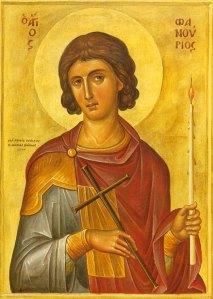



 Ortho-paradox-ia